


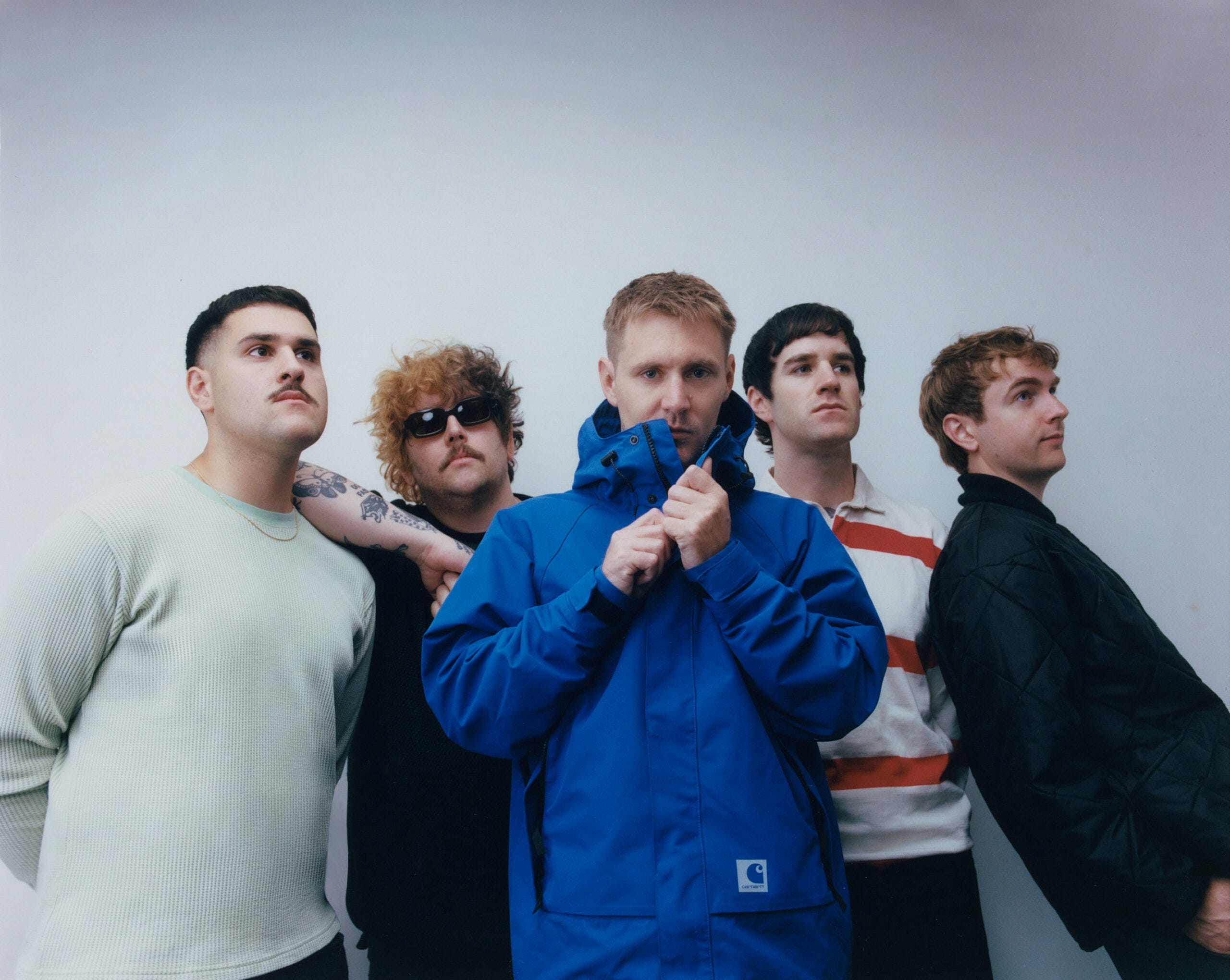
Ian Shelton has always been hard on himself. The Militarie Gun frontman pores over footage of his live performances, often has post-show notes for his bandmates, and keeps tweaking songs long after they’re finished. That restless drive has taken his career to new heights, but it’s also threatened to sink him.
On God Save the Gun, out October 17, Shelton stares down his worst parts. Across the record, he is howling through baggy eyes and a bloated face (‘B A D I D E A’), begging to have his body desecrated (‘Fill Me With Paint’), and offering to mutilate himself to save a relationship (‘Throw Me Away’). At one point, he threatens to kill himself (I Won’t Murder Your Friend’).
Those images weren’t theatre. Shelton spent much of the album’s three-year writing process, as he puts it, “fucked up” and “in the eye of addiction.” Though he’d mostly avoided alcohol — scarred by a childhood surrounded by it — he began drinking at 30. He spiralled as Militarie Gun’s touring intensity picked up, buoyed by their breakout 2023 debut album Life Under the Gun.
“Being on tour all the time was really challenging, and it just ended up being that every day was starting to become, ‘How can I start drinking sooner?’” Shelton says over the phone. “It just kind of snowballed and became its own cycle.”
Now six months sober, Shelton is speaking from a tour van1 as the band treks through California. He’s eager for the world to hear God Save the Gun, which he describes as the group’s most ambitious and rewarding work yet.
“The excitement of the record, taking a moment to appreciate how far we’ve come as songwriters and musicians, and what we’ve done with this band in a short amount of time is really gratifying,” he says.
Militarie Gun began as Shelton’s pandemic-era side-project. He was, at the time, most prominent for directing music videos and leading hardcore band Regional Justice Center. But Militarie Gun soon took over his life, breaking out as a chaotic and combustible vehicle for his diverse impulses.
How many other bands can rocket through the stomping ‘B A D I D E A’ (originally written for Doja Cat)2 to the soft grunge of ‘Very High’ to the trip-hop of Dazy collaboration ‘Tall People Don’t Live Long’? It’s a short list.
That willingness to take on new sounds is complemented by a hunger to iterate. Militarie Gun’s music may sound kinetic, but it’s also the product of extensive refinement.
“The whole time my goal was to write catchy songs, but I wasn’t skilled enough as a musician to do it,” Shelton says. “I’ve just been working and working and working at unlocking that next level of ability to match what I hear in my mind.”
“Catchy” often comes loaded with commercial implications. Militarie Gun have scored a Taco Bell commercial, and have high-profile fans in Post Malone, Bob Mould and Fred Durst. But Shelton insists that chasing hits has never been the point.
“If we were going for commercialism, we wouldn’t sing about any of the shit that I’m singing about,” he says. “I would make far more digestible topics for everybody if that was the goal.”
Instead, Shelton uses his pop sensibility to smuggle in the macabre. That’s especially clear on the album’s climax, ‘I Won’t Murder Your Friend’, in which he sings directly to loved ones about suicidal thoughts.
The track builds from acoustic strums into harsh, Yeezus-era synths, building up to audio from an interview with comedian David Choe, grieving the suicide of his friend Anthony Bourdain, in which he sobs: “You’re a fucking asshole, dude. You murdered yourself. You killed someone, that person happened to be you, but you couldn’t even show up for yourself.”
“It recontextualised the idea of suicide so much for me,” Shelton says. “I think we’re taught it’s this glorious martyrdom, that you’re kind of above reproach — you’re not allowed to be criticised anymore if you take your own life. I really enjoyed changing the perspective to being about the selfishness of suicide and the impact it has on everyone else.”
“Something that’s kept me on Earth many times is the concept of the person who has to walk in the room and discover my body, or the phone calls to my family members, or the idea that someone would have to come identify my body. I wanted to make a song that took away that glorification of suicide and provided the opposite point of view — to give somebody who’s in that headspace a brutal wake-up call.”
To clear the interview sample, Shelton sent a “very passionate text message” to David Choe. It took three days to hear back, but Choe signed off.
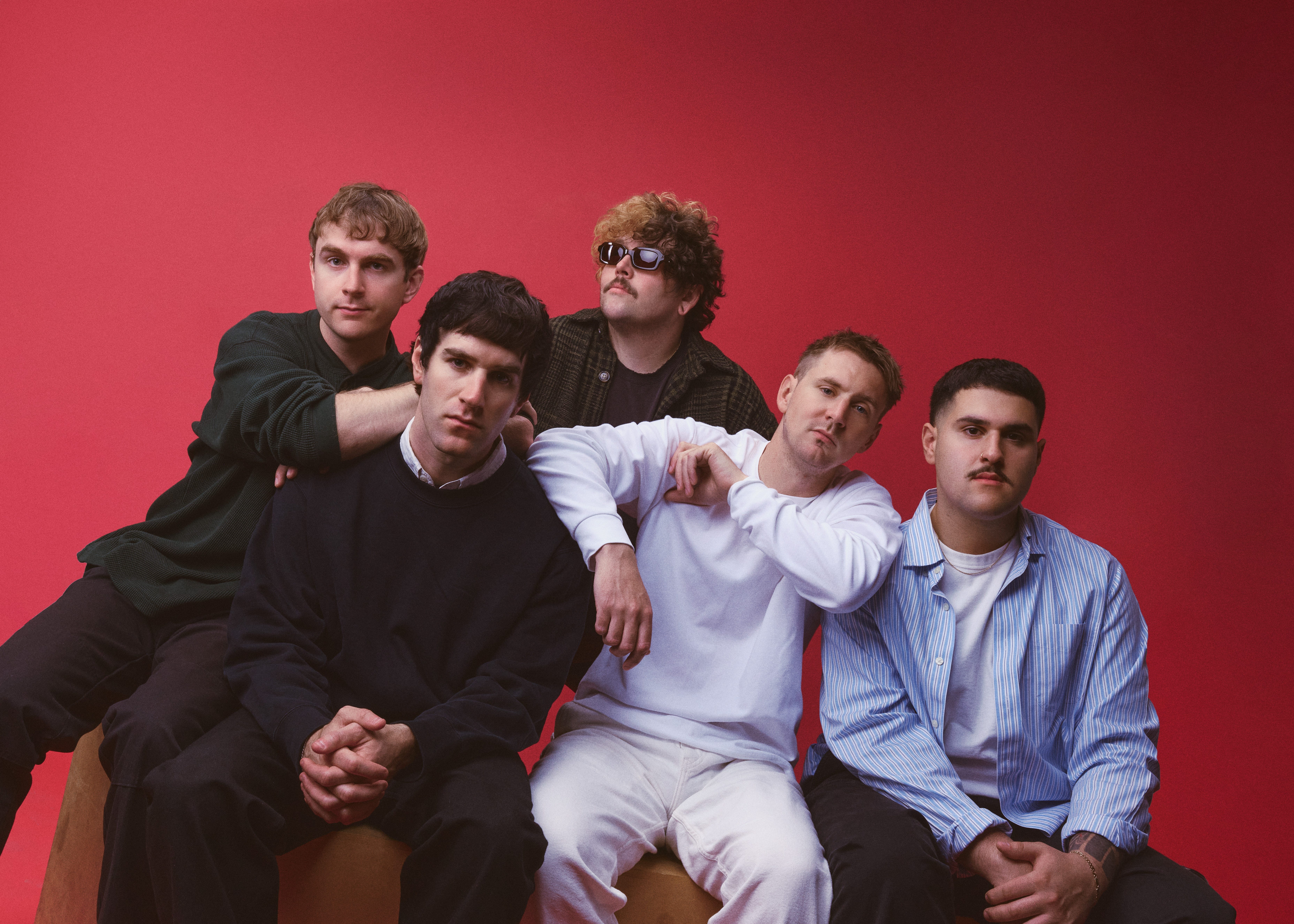
A similar saga played out with Shelton’s dream collaborator, Modest Mouse frontman Isaac Brock, who appears on the interlude ‘Isaac’s Song’. Shelton’s affection for Modest Mouse is long documented, but getting Brock on a song was a “fucking odyssey”.
“Someone gave me his number, and I just texted him like, “Hey Isaac, it’s Ian from Militarie Gun, blah blah blah.” And then he just instantly called me, and I’m like, ‘Oh no, fuck, holy shit—now I have to talk to Isaac Brock on the phone. This is terrifying’.”
What began as Brock singing over ‘Thought You Were Waving’ turned into a fraught back-and-forth. Brock hated the first iteration and didn’t want it to be used, leaving Militarie Gun with a dream link-up that seemed destined for the vault. Then Shelton went to work.
“I took these random pieces he sang, and I made the structure of what ‘Isaac’s Song’ ended up being,” he says. “I sent it to him and said, ‘Hey, I’d really like you to reconsider this. We restructured it, did some stuff to it — let me know what you think.’ And he just said, ‘Sounds good. Use it.’ That was the text.”
For Shelton, that blessing was almost as powerful as the collaboration itself. “The idea that he ended up letting us use it — it’s just so crazy to me. It’s beautiful. Hearing it back in the context of the full record was truly an overwhelming moment.”
“So much of what I want to do is heal my inner child, and so much of what we’ve gotten back from the success of Life Under the Gun was that a lot of the people I’ve looked up to throughout my life have stated their fandom of the band or said something positive to us.”
God Save the Gun is not a recovery record,3 but it concludes on an uplifting note. In our conversation, Shelton zeroes in on the very last line of the album, in which he sings “If you want to keep your life, you have to let it go”:
“That is instructional in a way, but it’s not — I don’t claim to have any answers. I’m not telling anyone how to live their life. But I think if you look at everything happening and decide something isn’t working, then obviously it’s best if it’s left in the past.”
For Ian Shelton, that meant getting sober and putting aside his suicidal ideation. God Save the Gun survives as an artefact from the life he let go — confronting, honest, and immortalised on one of the best rock records of the year.
‘God Save the Gun’ is out October 17 via Loma Vista Recordings. Pre-order on Bandcamp or pre-save on Apple Music.
In Australia, support is available at Beyond Blue on 1300 22 4636, Lifeline on 13 11 14, and at MensLine on 1300 789 978.
At one point, Ian corrects a mention of ‘tour bus’: “Tour van. We’re not—we don’t have enough money for a bus. Don’t start with the idea that we’re doing a lot better than we are.”
”I think I was asked to be a part of the writing session because she really loves Show Me the Body, and I had played drums in Show Me the Body for a handful of shows. I think my proximity to them resulted in me being asked to be there.”
“Recovery records are kind of a very specific format in the rock genre, specifically, where people get sober and they make records about it. This isn’t that record. I didn’t make this record while sober—I made this record while fucked up. And it’s so much more in the eye of addiction, rather than having much to say about the concept of recovery.“