

Cry Club is committed to the bit
The ‘bit’ being ‘releasing a brilliant album that balances anger and optimism in a world that feels bloody awful a lot of the time’.

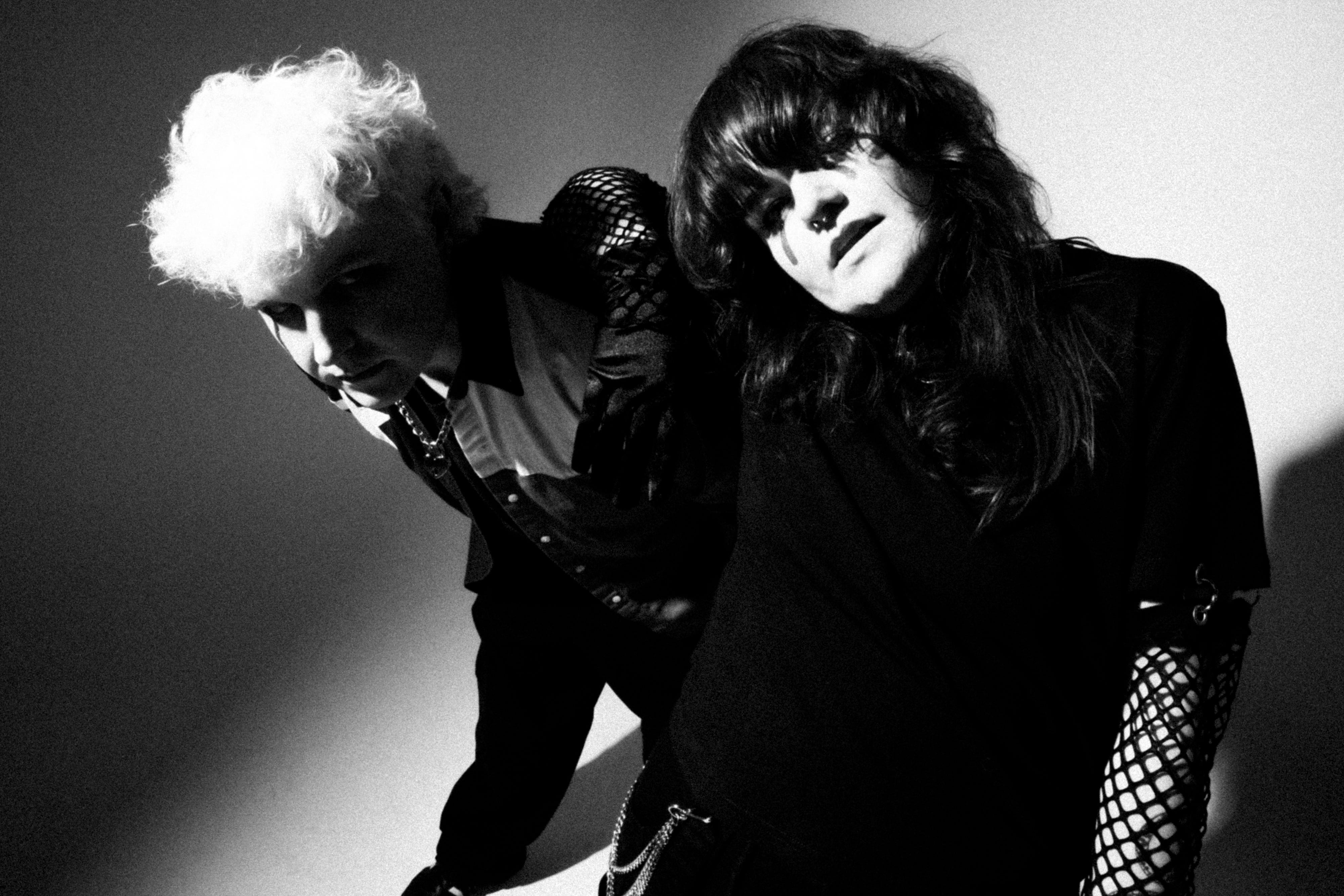
The first words you hear on Cry Club’s High Voltage Anxiety are an immediate agenda-setter for the Melbourne duo’s third album: “Right now everyone’s comfortable in their discomfort,” the speaker, a friend of the band, says. “Everybody needs to realise that our conditions can change if we force them to change.”1
If anyone understands how to control their destiny, it’s Cry Club. Since forming in 2018, Riley and guitarist Jono Tooke have fought and succeeded against rolling waves of adversity, so much so that their fanbase has coined the “Cry Club curse” to describe every time something bad happens to the band.
But when they meet me in a beer garden on a warm February evening to chat about their third album High Voltage Anxiety, Tooke and Riley are sanguine, even about their purported misfortune.
“There’s a flipside of the Cry Club curse,” Riley tells me. “We have the worst luck ever, but our songs are evergreen.”
The latest round of those evergreen songs on High Voltage Anxiety were written and recorded over a period starting in January 2023, but its bloodlust for fascists, oligarchs and bigots feels more resonant than ever in 2026.
“We’re like, ‘This won’t be relevant by the time it releases’ but unfortunately…” Riley trails off, as Tooke picks up the thread, comparing the world to a viral Community GIF of Donald Glover’s character picking up pizza and returning to an apartment on fire.2
High Voltage Anxiety is Cry Club at their most assertive and ambitious. It delights in subverting expectations. The breezy sheen from their 2020 debut God I’m Such a Mess has been sanded raw, and the vampy glam-rock that powered its 2023 follow-up Spite Will Save Me has been tossed into a wood chipper.
What has been spat out is an industrial-tinged record that wears its influences (Nine Inch Nails, The Prodigy) proudly without losing its identity as a Cry Club album.
“Balancing grit and camp is very hard,” Riley admits. “You just have to commit to it and leave no room for interpreting.”
Tooke adds: “For a long time when we tried working with other artists and producers co-writing, often we’d walk away from a session feeling like, ‘This isn’t a Cry Club song’. And over time I started thinking, it’s because nothing went wrong.”
That vision didn’t crystallise overnight. It took time and, like most critical Cry Club moments, a hefty dose of bad luck. In late 2019, Riley and Tooke moved from their home state of New South Wales to Melbourne. When they landed, they had a debut album on the way and bookings with a handful of major Australian festivals in hand.
“We thought that was going to be the year everything happened for us, we got booked for Splendour, Falls Festival, Lost Paradise, and we thought, ‘How fucking cool is that?’,” Tooke says. “And then it all got nixed.”
The pandemic brought everything to a halt. With a career-making run of touring dates on ice and their debut album delayed (it released six months later that November), Cry Club bunkered down and began making music like it was their full-time job.
“It was this weird trade, to have the time to develop creatively versus having this momentum,” Tooke says. “I think we’re better off having had the time to develop, rather than land at this thing not necessarily being the version of it that we wanted it to be.”
Riley adds: “We get full control over the vision and direction, because we spent so long figuring it out.”
Before the pandemic’s intervention, Cry Club were primed to push out a highly anticipated debut album and be anointed one of the country’s hottest young bands on the rise. In Tooke’s view, that often funnels artists to a boom-or-bust situation:
“You either hit it big quickly and then you go, ‘Cool! Yahoo!’, and if you don’t get that there’s an endless graveyard of major label signed acts or independent acts that didn’t achieve success within five years, and then they have since called it quits quietly, and then we never hear from that act again.
“But then there’s a version of this which can be sustainable, that can go for 10+ years and then crack it at some point, and that’s a better place to crack it because you will have learned how to handle everything.”
That final camp is where Tooke and Riley hope Cry Club will land. In their view, High Voltage Anxiety is an amalgam of the experiences, lessons and confidence in themselves acquired through taking the long road to stardom.
“I don’t think we get to be that convincing about what we’re doing if we had stayed the same versions of ourselves,” Tooke says.
“You fall short on the conviction without following whatever your truest path is. I always think about people who hit a version of success that they were destined for because they were the most ‘them’ they could be. That’s the thing that an audience secretly wants: for you to be the most ‘you’ version of you.”
That may as well serve as Cry Club’s credo. They’ve ascended to become one of the country’s most beloved grassroots bands with a must-see live show. On stage, Riley and Tooke are an electric storm, stirring up a raucous crowd energy that never tips into being unsafe for the band’s proudly diverse fanbase of queer folks and allies.
“A lot of the time with our visuals, a big goal was saying, ‘If this is too turbo to look at, it’s not for you’ … I think that’s part of what’s helped refine the community aspect,” Tooke says.
“There have been acts that go like, ‘This is for everybody!’ and then people who suck go like ‘This is for me!’ and suddenly all the shows become full of assholes. It’s not necessarily about kicking people out and being exclusive, but about being more selective and deliberate about who you’re bringing in.”
“Sometimes it’s not for you!” Riley adds. “The most precious thing to me is when people who are trans tell us they dressed in a gender-affirming way for the first time at one of our shows. That’s so important to me to prioritise and protect.”
Awareness of their impact seems to help fuel the fire for Riley and Tooke, along with an insatiable creative streak. They’re certainly not in music for the payday (“I think anyone who invested in crypto would be in a better position,” Riley laughs).
But even the most committed artists have their mettle tested as time passes, costs mount, and industry support siphons off. In a spoken word break on High Voltage Anxiety single ‘This, Forever’, Tooke alludes to the toll each album takes, saying: “The amount of effort that goes into doing this stuff, like each time… not saying it’s the last time but treating it as if it’s that.”
“Those acts we don’t hear from anymore, they’ve quietly stopped because they exhausted themselves into nothing,” Tooke says to me during our conversation. “One of the blessings of doing this is, the worst day for Cry Club is still a day with my best friend.”
He affectionately nudges Riley, sitting next to him in the beer garden, who responds as any true best friend would: “I told you not to fucking touch me.”
‘High Voltage Anxiety’ is out now. Stream it here and buy it here.
An earlier version of this article misidentified the speaker as Heather. Sorry, Heather! Sorry, Heather and Jono’s friend!
Since this conversation in February, I think another two or three wars have broken out. Everything’s going super well!